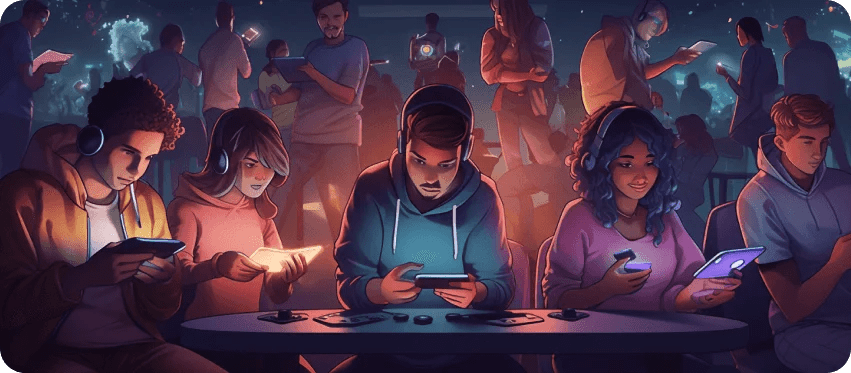
When Shared Worlds Become Shared Lives
In a world often obsessed with leaderboards, K/D ratios, and who’s top fragging, it’s easy to forget the quieter, softer side of multiplayer games—the side that brings people together not just as teammates, but as friends, companions, and even chosen family.
At Ludora, we believe gaming isn’t just about winning. It’s about belonging. And sometimes, the most powerful thing a game gives you isn’t XP—it’s a connection.
This is the story of how multiplayer games go beyond the grind and the glory… and become something real.
1. Not Just Players—People
Behind every username is a person. Someone with a life, a story, and a reason they logged in today.
Multiplayer games open up spaces where:
- A healer in Final Fantasy XIV becomes your comfort after a rough day.
- A duo in Fortnite becomes your best friend halfway across the world.
- A Minecraft server becomes your digital neighborhood.
Whether it’s through voice chat, emotes, or just unspoken teamwork, these small moments of presence create intimacy. And sometimes, all it takes is one co-op run to make you feel less alone.
2. Digital Campfires & Virtual Safe Spaces
Some multiplayer spaces feel less like arenas and more like homes.
Take games like:
- Animal Crossing – Where you trade fruit and share design ideas with real-world friends.
- Stardew Valley Co-op – Where farming together becomes a way to catch up, decompress, and share quiet company.
- Valheim or Terraria – Where building a base together somehow builds trust, too.
These aren’t just games. They’re campfires. Places to exist side-by-side in comfort, where the goal isn’t to beat anyone it’s just to be.
3. Strangers Who Don’t Stay Strangers
In many games, your teammates are random. But sometimes, randomness turns into ritual.
You match with someone. You vibe. You queue again.
Eventually, they become:
- Your regular co-op partner
- Your Discord friend
- The person you talk to every day
That’s the magic. Multiplayer games give us low-stakes beginnings to high-stakes friendships.
What starts with, “Nice play!” might end in “Hey, you good today?”
4. Empathy Through Play
Games are one of the few mediums where we actively rely on others. And that creates real empathy.
- You wait for someone who’s clearly new to the dungeon.
- You res your teammate even though it might get you killed.
- You carry the team, not for glory but because someone’s struggling.
These moments show that connection doesn’t require deep conversation. Sometimes it’s just the unspoken “I’ve got your back.”
5. Mental Health, Healing & Being Seen
For many, multiplayer games are lifelines.
They offer:
- Structure when the real world feels overwhelming
- Social connection for those with anxiety, depression, or isolation
- A way to be present with people without the pressure of face-to-face interaction
Whether it’s raiding with your guild, fishing with your partner in-game, or running dailies while venting in voice chat… these moments are healing. They remind us we’re not alone.
Final Thoughts from Ludora
Yes, competition can be thrilling. But connection? That’s where the soul of multiplayer gaming lives.
It’s not always about being the best. Sometimes it’s about:
- That laugh after a ridiculous fail
- That hug emote when someone’s feeling low
- That person who logs in just to make sure you’re okay
In a digital world, these bonds are real. They matter. And sometimes, they last a lifetime.
So the next time you squad up, party in, or drop into a game remember:
You’re not just playing with people. You’re playing for the moments between the matches.
Because in the end, connection beats competition every time.
 Ludora